
Beyond the Map
Revisiting existentialism from lived experience
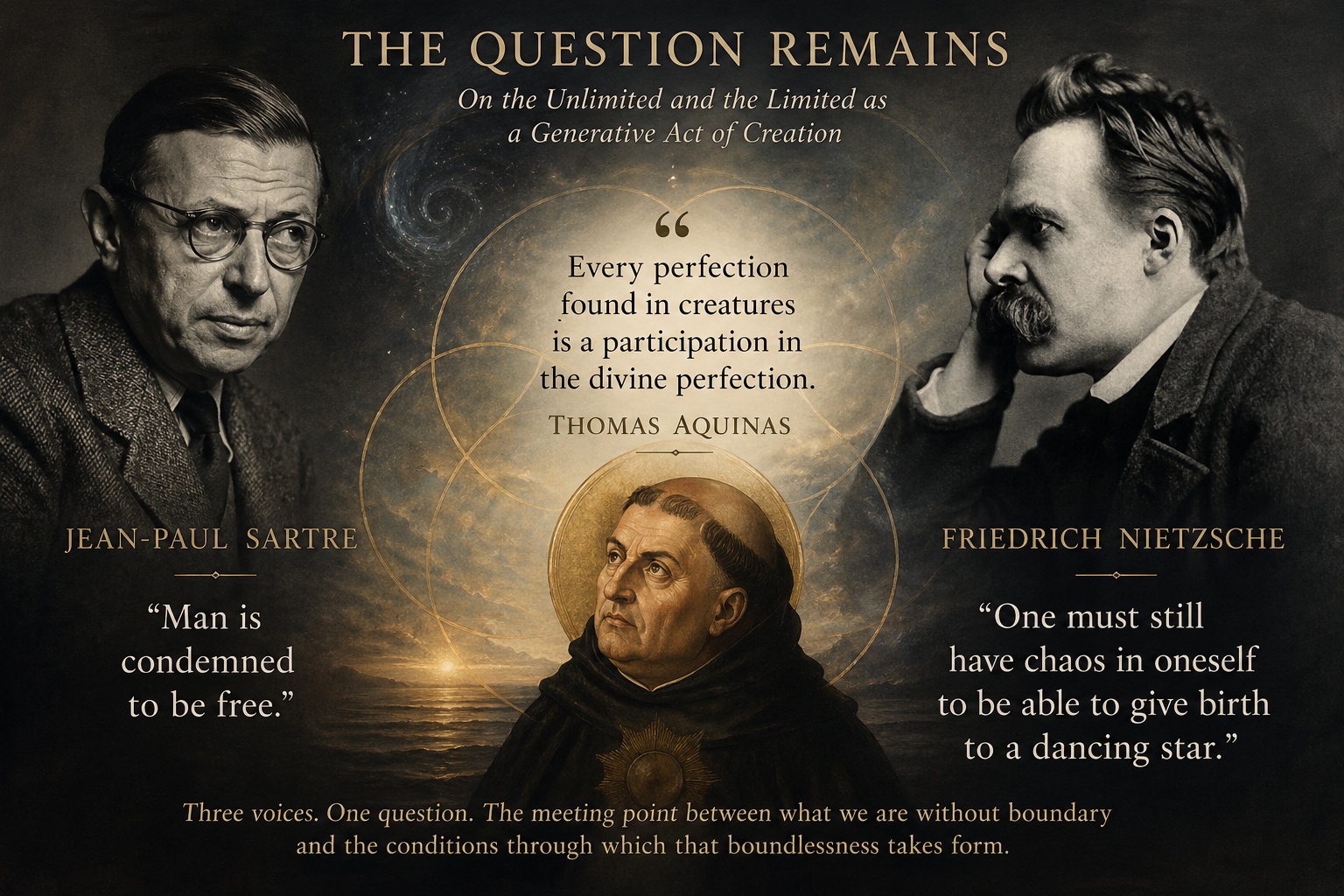
“Man is condemned to be free.”
— Jean-Paul Sartre
“One must still have chaos in oneself to be able to give birth to a dancing star.”
— Friedrich Nietzsche
I came of age in the late 1960s and early 70s, in a cultural atmosphere quietly saturated with the possibility of annihilation. The threat of nuclear war was not always spoken, but it was present as an undertone shaping the emotional climate. There was a sense, not fully articulated but widely felt, that everything could end abruptly, without resolution.
Into that atmosphere I came across names like Jean-Paul Sartre and Friedrich Nietzsche. I encountered them as a teenager, too young to grasp their philosophical depth, but still able to feel their impact. Ideas about the meaninglessness of life, the absence of inherent purpose, the burden of freedom didn’t arrive as carefully reasoned positions. They became something we could wear—an expression of the inner conflict of adolescence—creating a mood that seemed to confirm what was already in the air.
I flirted with these ideas but never fully engaged with existentialism at that point. It was more that my own teenage angst recognised the territory. The sense of groundlessness—of not knowing what any of this ultimately meant—was already there, culturally and emotionally. The philosophy simply gave it language, even if I could only half-follow what was being said.
The Question Remains
Sign up for updates, news, reflections, and poems, as well as occasional book or article recommendations from the edges of philosophy, mysticism, and consciousness. After signing up, you’ll receive a welcome email — please click the link to confirm your subscription (and check your spam folder if you don’t see it).


Newsletter Sign-Up